







Policy papers and consultations
Register of gambling personal licences
If we grant you a licence to run a gambling business, you will be able to download a copy of your licence from eServices. The following guidance is specific to casino games, and is relevant to those who hold a casino licence. An operating licence allows you to provide gambling activities to customers in Great Britain. You can read more about the legal definition of casinos in Part 1 section 7 of the Gambling Act 2005 (opens in new tab). The Codes also require that advertisements for gambling products or services do not mislead. In practice, this means that in many areas the Act sets a framework, with more detailed rules set out in regulations made under the Act.
Policy papers and consultations

The number of additional machines that a 1968 Act casino will be entitled to will be determined by the size of all three different areas that have been outlined above – the total gambling area, the table gaming area and the total non-gambling area. For 1968 Act casinos that access the new machine entitlements, we propose that the mandatory licence conditions remain aligned, so that only areas that comprise 12.5% of the minimum required table gaming area can be taken into account in determining the table gaming area. We will also amend the current inconsistency in the regulations which requires Small 2005 Act casinos to have a table gaming area of at least 500sqm (identical to their minimum overall gambling area) by reducing this requirement to 250sqm.
The white paper set out the government’s plans for modernising the regulation of the gambling sector.
For casino products, this creates specific product design obligations. UKGC’s LCCP Social Responsibility Code 3.4.1 requires licensees to interact with customers showing signs of gambling-related harm. A long-established proprietary casino domain reflects years of continuous operation under a consistent ownership structure. Domain age is one of the lower-weighted components in Domain Score, but it reads differently for casino platforms. When a white-label casino carries WHOIS privacy and a recently registered domain, it can be harder to trace accountability back through the corporate chain. For white-label operations, WHOIS records sometimes reflect the platform provider rather than the licensed operator, or are obscured entirely.
The interaction design of slot machines and table games creates specific compliance obligations that don’t apply to betting or bingo products in the same way. The LCCP sets out licence conditions and social responsibility codes that all licensees must follow, but some provisions hit casino operators with particular force. Every UK online casino listed here holds a Remote Casino Operating Licence from the UKGC, but licensing is only the starting point. If you manufacture gambling software, but also provide facilities for gambling only in circumstances in which you host those facilities through other operators’ platforms, then you may be eligible to hold a host operating licence. Remote gambling and software technical standards do not apply to the software you provide for overseas operators who are not licensed by the Gambling Commission.
For every gaming table used in the casino, the effect of the amendment is to increase from two to five the number of gaming machines that may also be made available for use. Its role is to oversee all gambling activity in the country, including that at online casinos, in betting shops, arcades, lotteries, and bingo halls. Otherwise, payment processing per se is not licensable under British gambling law and the main restrictions are that land-based bingo and casinos may not offer credit for wagers and remote gambling operators may not accept credit card payments (including through money services providers). As well as an operating licence, an operator wishing to make gambling facilities available in a land-based environment (e.g., casino, betting shop, bingo hall or arcade centre) will also need to apply for a premises licence authorising that activity from the relevant local authority. Other than that, different types of gambling activity conducted by the same media can be combined – for example, a “remote” gambling operating licence might well have betting, gaming and software operation endorsed upon it. As far as remote gaming and betting is concerned, licences are readily available to suitable applicants.
The UKGC’s online fee calculator helps estimate costs, making it easier to plan how to open a casino in the UK. For example, a small non-remote casino with a GGY under £550,000 pays around £5,341 annually. An operating license is mandatory for offering casino games like poker, blackjack, or slots, while a premises license is required for physical locations, granted by local authorities. Whether you’re launching a high-street venue or a digital platform, understanding casino licensing requirements UK is the first step. To operate legally, every UK casino must secure UKGC licensing, a rigorous process designed to uphold industry standards. Opening a casino in the UK is a venture steeped in opportunity but bound by stringent regulations.
A typical online casino requires both remote casino and remote betting permissions. A licensed operator is any company that holds one or more gambling licences issued by the Gambling Commission. 456.Subsection (7) allows the Secretary of State to use her powers via regulation to control the non-gambling facilities provided in casinos by attaching licence conditions. Large and regional casino premises licences also authorise the provision of facilities for bingo, again, provided there is a valid bingo operating licence held by the person providing the activity.
Evidence was received in response to the land-based gambling consultation and through an additional supplementary consultation which focused on this reform specifically. Operators will also need to be able to demonstrate that their new gambling and non-gambling areas abide by the updated rules in the Mandatory and Default Conditions, which will include the sliding scale and other restrictions on the sizes of different areas of the casino. As set out in section 151 of the 2005 Act and in the Gambling Act 2005 (Premises Licences and Provisional Statements) Regulations 2007, the operator will also need to submit an up-to-date plan showing their table gaming area, other gambling areas and non-gambling areas.
The first two matters are not, and cannot be, delegated to a licensing committee, and must be taken by the authority as a whole. 416.Under legislation repealed by this Act, it has been a requirement that the grant of certain gambling permissions should take account of whether there is unfulfilled demand for the facilities. The new licence for the track can only be granted at the same time as, or after, the original licence has been varied. 412.In Scotland, the powers of the Secretary of State in relation to the form of the licence are to be carried out by the Scottish Ministers. It also provides prosecution powers for licensing authorities in relation to their licensing functions.
The minimum table gaming area for Small 2005 Act casinos, which is currently 500sqm, will be reduced to 250sqm to align the minimum space requirements for these different regimes. Allowing 1968 casinos to increase their machine offering above their current allowance of 20 could result in greater customer willingness to take breaks, which will likely increase reflection and reduce risk. This includes many casinos monitoring customer expenditure across all gaming products, enhanced due diligence measures with trigger values for spend and loss applied to customers and algorithmic systems that use predictive models to identify customers at risk. We also intend to permit a smaller increase in machines for venues that do not meet these size requirements, proportionate to overall size and non-gambling area. The white paper set out the government’s intention to bring the two regimes closer together, with similar requirements on machine numbers proportionate to size, non-gambling area and gaming tables. In practice, operators elect to site Category B machines and typically have an offering of 20 Category B1 machines.
Free-to-play casino games with prizes are regulated by the Gambling Commission (licence required). Casino gaming (including slots and casino table games such as roulette & blackjack) The Gambling Commission has a range of powers, including the ability under the Gambling Act 2005 to investigate and bring prosecutions against those that provide unlicensed gambling facilities to consumers in Britain. The regulator also makes use of the system of personal management licences to act against individuals and there have been licence suspensions in cases where the regulator considered the operator to be substantially non-compliant. Anyone who is involved to any material extent in the provision of gambling, or gambling software, may be committing an offence in the UK if they are not correctly licensed or if they cannot take advantage of one of the limited range of exemptions in the legislation. The legal approach is to completely criminalise gambling but then to make exceptions for persons who comply with the licensing regime, pay the applicable tax, observe the applicable regulation and so on.
Current application fees
Anecdotal evidence suggests that for some individuals the option of attending physical bingo premises delivers substantial social benefits which would be lost if the sector is not supported. A healthier land-based gambling sector, able to compete on a more even basis with similar online gambling opportunities, is likely to support local employment opportunities, regeneration effects and contribute to business rates. We will use the responses to this consultation as well as wider engagement with the sector to gather data to estimate the likely change in machine configuration in bingo and arcade venues.
Up to 20 percent of total gaming machines can be Category B. This rule mandates that at least 80 percent of all gaming machines in Adult Gaming Centres (AGCs) and bingo halls must be Category C and D. As above, 1968 Act casinos will retain the option of continuing to operate under the existing regime should they not wish to increase their machine allocations.
For 1968 Act casinos that meet the same size thresholds as Small 2005 Act casinos, we have proposed introducing a 250sqm table gaming area requirement. However, those casinos that would be allowed to keep their current gambling space would have more flexibility in terms of the layout of their venue compared to Small 2005 Act casinos, which may be deemed unfair by casinos without this advantage. Option (2) would not require currently operating casinos to reduce their total gambling space. However, it would be disruptive and potentially impose additional costs onto those casinos with a gambling area of 1,500sqm or more that are already established.
The Advertising Standards Authority (ASA) regulates gambling advertising, though LCCP breaches by licence holders are enforced by the Commission itself. The most recent significant RTS update came into effect on 17 January 2025, extending requirements previously applicable only to slots to a wider range of online casino products. The RTS set out the technical requirements for remote gambling systems and gambling software.
- This free service is mandatory for all remote licensees.
- Follow these steps to confirm an operator holds a valid UKGC licence
- The notes relating to prize gaming permits under Part 14 expand upon the meaning of “occupy” for these purposes.
- Remote betting host virtual events licence
- The Gaming Machine (Circumstances of Use) Regulations 2007 prohibit the use of debit cards for direct payments to gaming machines, and prohibit any use of credit cards.
Many of the responses from outside of industry were strongly in favour of staff alerts but argued that they needed to be complemented by staff training so that they can intervene in a meaningful way. Non-industry responses were supportive of staff alerts being mandated, while views were split across industry. The Behavioural Insights Team’s response to the consultation recommended that voluntary limits that are strongly encouraged are used over mandatory limits as the evidence of the impact of the latter is limited. However, what the mandatory limits should be and how long the cooling-off period should be once the limits are hit prompted a wide range of responses. The government’s preference is for a 30 second minimum cooling-off period, but we would be content with a longer minimum time period if evidence provided in response to the Gambling Commission’s consultation suggests that longer is needed in order to protect players. Other responses from outside of industry thought that the cooling-off period should be longer, with respondents stating either 60 or 120 seconds.
Obtaining a UK licence requires extensive background checks, financial audits, technical testing, and ongoing compliance monitoring. The UKGC is widely considered one of the world’s most rigorous gambling regulators. The UK Gambling Commission (UKGC) is the government body that regulates commercial gambling in Great Britain. The statutory levy, financial vulnerability checks, online stake limits, and enhanced AML requirements introduced between 2024 and 2025 represent the most substantial expansion of operator obligations since the 2014 advertising reforms.

Fees vary based on your casino’s Gross Gambling Yield (GGY). Each license ensures casino compliance with UKGC standards. The UKGC offers several licenses depending on your casino’s scope. The LCCP is not static, we make amendments or additions to take account of developments in the industry or emerging evidence on the most effective means of promoting socially responsible gambling.
Not regarded as gaming where there is no prize offered in “money or money’s worth”. Fantasy betting (payment to back a ‘league’ or ‘portfolio’ selection over a period of time, for example in relation to sport) Sports/horse race betting (if regulated separately to other forms of betting)
Kenya’s New Gambling Law Is Here And It’s Going to Reshape the Industry
454.A casino premises licence will also authorise the provision of facilities for betting, where the licensee or a person authorised in writing by the licensee holds a relevant betting operating licence. 452.This section authorises the provision of facilities for “virtual” betting in casinos and on betting premises. This section contains the gaming machine entitlements which apply to the different types of premises licence issued under this Part. Such conditions will be specified in regulations, and must be included in all premises licences, or classes of premises licence, to which they apply. 442.These sections provide the Secretary of State, Scottish Ministers and licensing authorities with powers to place conditions on premises licences.
Please outline any other proposals relating to machine allowances in arcades and bingo halls that you think that we should consider. Please explain why this is your preferred option. Please rank these options in order of preference, with 1 being your preferred option.
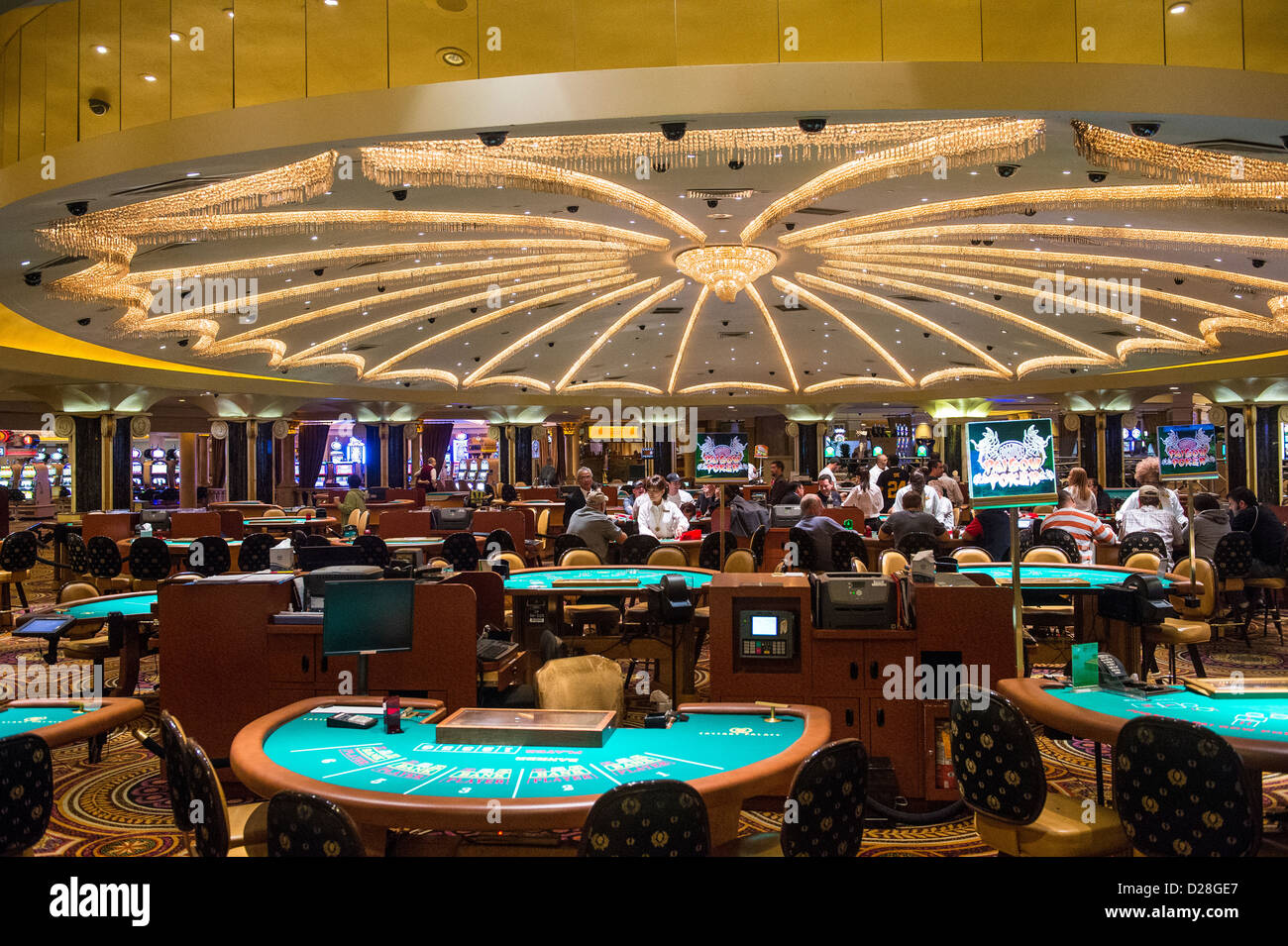
Online operators must meet strict security standards, including encryption, data protection compliance, and fair game certification. You must implement safer gambling tools like deposit limits, affordability checks, and self-exclusion mechanisms. The application process begins online. This rule was introduced following the UK government’s gambling white paper and is aimed at reducing gambling-related harm. These changes focus on player protection, corporate accountability, and industry funding for gambling harm initiatives.
This means that the casino operates under guidelines for player safety, data protection, and player protection. The UKGC implemented this to prevent players from becoming addicted to gambling and spending more than they can afford. We may earn a commission if you click on one of our partner links and make a deposit at no extra cost to you.
Some concerns were raised by industry about the technical feasibility of voluntary limits, particularly for Category D crane grab machines. We are also proposing that casinos not on gamstop this minimum transaction time applies to all machines. The vast majority of respondents agreed that there should be a minimum transaction time for customers making a cashless transaction on a gaming machine. Category D machines do not have a committed payment limit. The committed payment limits are £10 for Category B1, B2, B3 and B3A machines, and £5 for Category B4 and C machines. The deposit limits are currently set at £20 for Category B and C machines, and £2 for Category D machines.
The government proposes that account verification should be required on each transaction, in line with the majority of responses to these questions. A response from an advocacy organisation opposed the introduction of direct debit card payments on the basis that there is evidence that cashless payments result in increased and unplanned spending when compared to cash. One betting shop operator was concerned that allowing direct debit card payments would minimise the interactions a customer has with betting shop staff as their current customer journey requires a certain level of interaction with a staff member. They stated that it would be an unnecessary and disproportionate burden for a low stake and low prize machine. Over 70% of responses also agreed that card account verification should be required on each transaction. The Commission will consult further on minimum transaction times, limit setting functionality, staff alerts, safer gambling messaging and the display of session time and net position.
45% of respondents would not be happy at all to pay for gambling via cashless payment methods. 77% felt that cashless makes it easier to spend more on gambling than intended, and 66% said that using cashless payment methods made it feel like they are spending less money than they actually are. Anecdotal industry evidence suggests that payment methods are a factor in this decline in machine usage, as pub goers now pay for food and drink by card but might have previously played a machine using spare change. While the existing framework has allowed for some innovation in cashless payments, gambling has largely remained cash-based. In addition to this, research commissioned by Bacta showed that in 2018, seaside arcades alone contributed £451m in UK GVA, and were responsible for employing around 19,000 people. Cash-only gambling was assumed to give players more control by providing natural interruptions in play to obtain more cash, helping players play within budget limits.